NEWS
Dynamic Testing of Structures
By the term dynamic structural testing, imagine load testing, which is an essential part of material testing. During these tests, specimens are subjected to alternating loads and other factors with varying intensity in order to best simulate real-world conditions. In contrast, static material tests are performed under a constant load to determine their strength and deformation tolerance. With the help of these tests, potential structural defects can be detected and corrected, which could otherwise cause extensive damage.
Dynamic structural testing – types
Dynamic structural testing can be divided into two basic groups:
- The first group involves forced vibration of the structure under the action of external dynamic forces. During this test, it is determined whether the vibration limits the usability of the structure or whether it affects the functionality of machinery installed on the structure.
- The second type of testing focuses not only on determining the natural dynamic properties of structures, but also on the characteristics of their natural vibration.
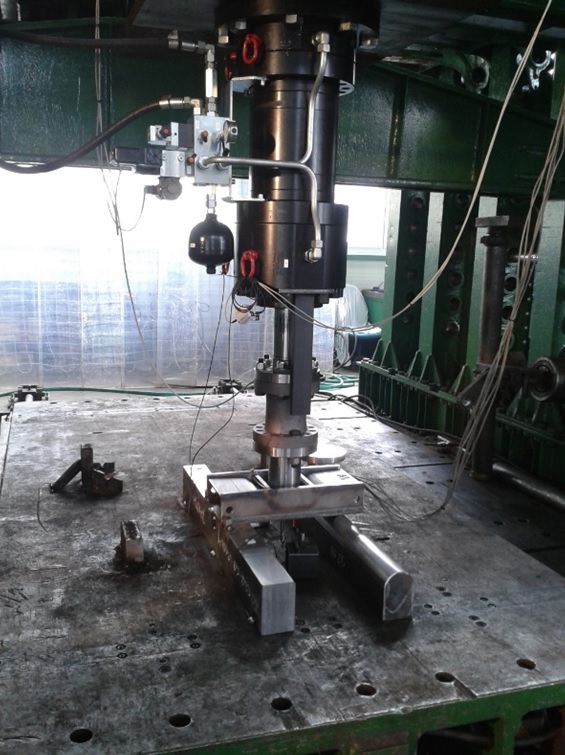
Steel structure tester 1.2 MN
With this tester, it is possible to perform not only static and dynamic testing of steel structures, but also fatigue testing of structures and their components. The simulation of real operational loads is then realized using a hydraulic loading system. We also offer the option to install strain gauges on the test specimens and provide access to their records during the testing process.
Specifications of the steel structure tester 1.2 MN:
- Maximum tension – compression load Fmax = 1.2 MN (dynamically max. 80%)
- Maximum dimensions of the tested structure are: width 3.5 m, height 2.5 m, depth 4.5 m (in case of a requirement to test larger structures, this tester can be moved to the CDZ 2500 testing facility, where we can test structures with dimensions up to 8 x 4 x 6.5 m)
- Maximum loading frequency f = 7 Hz
- Option to define any load curve in .xls format
- Cylinder stroke up to 300 mm
- Maximum data logging speed 1 kHz
- Option to record the test force, cylinder displacement, and 16 other different measurable variables (displacement, tilt, temperature, and strain gauges)